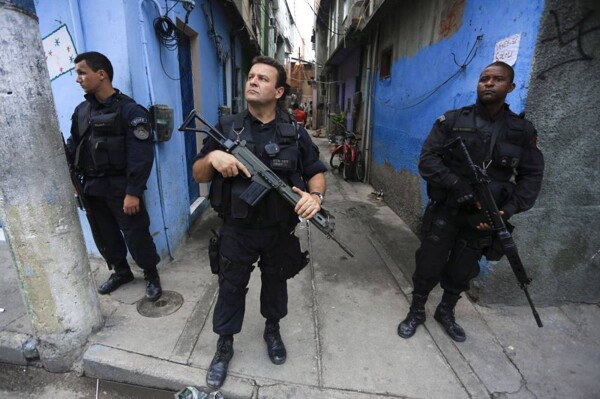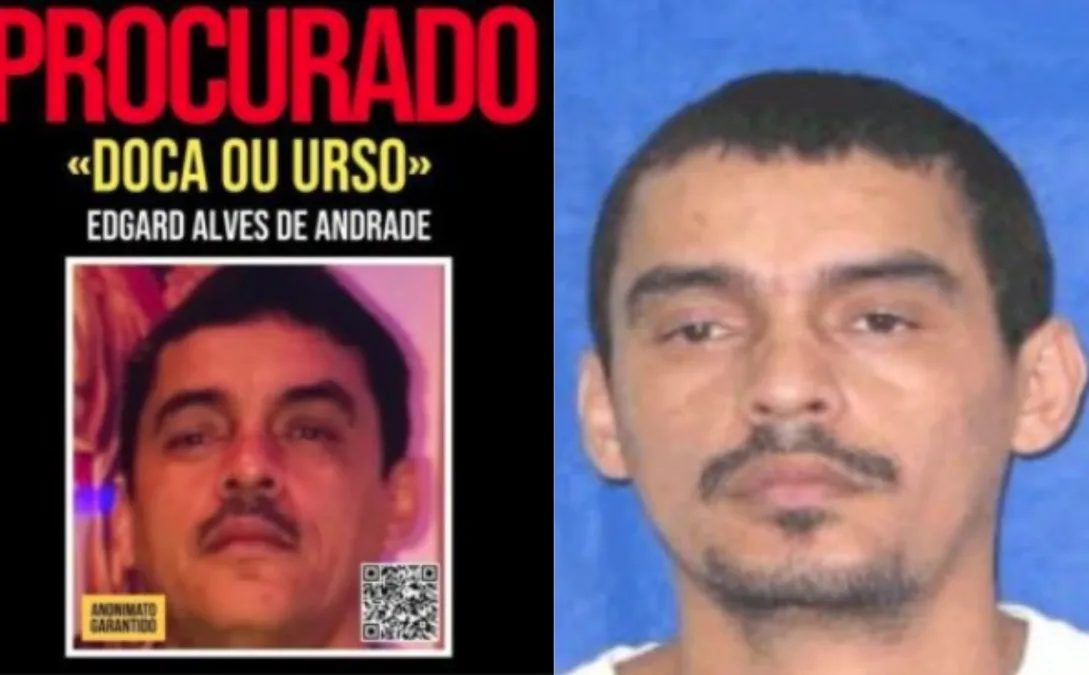
Edgar Alves de Andrade, known as “Doca” or “Urso,” has risen to lead the Comando Vermelho (CV), one of the oldest and most violent criminal organizations in Brazil. His ascent to power in Rio de Janeiro marks a structural shift in the dynamics of drug trafficking. Doca, 55, entered the criminal world over two decades ago and has been accused of being responsible for more than a hundred homicides, systematic torture, and an expansion of the CV's influence, making him one of the country's most wanted crime lords. The territory under his control is a network of small cities—the favelas of northern Rio—that doubles in size to the famous neighborhood of Copacabana, according to journalist Héctor Gambini. In the favela complexes of northern Rio—Complexo do Alemão and Complexo da Penha—Doca has consolidated a level of protection worthy of a high-ranking official, imposing a security barrier with his own hitmen and a territorial control strategy that includes heavy weaponry, attack drones, and a sophisticated criminal intelligence network. During the operation known as “Operation Containment,” carried out by over 2,500 state agents, at least 121 people were killed, including four police officers, and dozens were detained in one of the deadliest raids in Rio's history. However, his leadership of the CV managed to reverse that trend, increasing the organization's controlled areas in the Metropolitan Region of Rio by 8.4% and regaining a dominant position. Rio's police identified that 78 of the first 99 bodies identified after the operation had serious criminal records, confirming they were facing a highly professional, structured, and violent organization. Furthermore, the organization's ability to establish its own security barriers and use advanced technology marks a qualitative leap in Brazilian organized crime. For the Rio state government and federal forces, the priority is twofold: to capture Doca and dismantle the complex operational network he has built. At the same time, neighbors and human rights organizations have denounced extrajudicial executions, questioning the state's methods in the fight against drug trafficking. The impact of these dynamics transcends the local: analysts point out that the CV's structure under Doca extends interstate and international ties, with drug routes crossing Brazil into South America and Europe. Meanwhile, the city of Rio faces a scenario where state authority and criminal authority are waging a silent war over lives and territories. It is there that the Comando Vermelho has set up its national headquarters and from these bastions directs drug trafficking routes, extortions, and a logistics network that surpasses the usual sophistication of urban gangs. Gambini also highlighted that close-quarters confrontations with the police included rifles, machine guns, grenades, and drone attacks. But the capo's security barrier—according to witnesses and agents—resembles that of a head of state, complicating the authorities' efforts. The new leadership of the Comando Vermelho under Doca marks the beginning of a more sophisticated era in Brazilian drug trafficking, one that demands a coordinated, profound, and sustained long-term state response. “We're talking about a ‘Cartel of Beasts’,” the journalist affirmed, referring to the magnitude of the criminal apparatus under his command. Doca's rise occurred in a context of the CV's power erosion between 2020 and 2023, a period during which it lost ground to militias. In this scenario, Doca emerged as a leader whose cruelty and operational capacity leave no room for underestimation. Authorities had made Doca's capture one of their main objectives, but he managed to evade the siege and emerge unscathed from the operation. The capo's escape confirmed what investigators had been asserting for months: that he had managed to set up an almost impenetrable defense system in the capital.